Showing posts with label Science Corner. Show all posts
Science Corner: Laziness
Laziness, let's admit it.. we all have it in ourselves, no matter how workaholic you are.
Laziness, a trait which seemed pretty disadvantagous to another person's point of view, turns out to be a advantage to humankind. Keep in mind that procrastinate and being lazy are two different things. Procrastinate is sidetracking from quests which requires primary priority, while laziness is just being lazy. THERE'S A DIFFERENCE!!
Anyhow, laziness has been advantagous towards humankind, and IS in fact a trait that has been developed by our ancestors (Yea, didn't see that coming did you? Or maybe you already knew..).
I mean, there must be a reason for human to create cars, smartphones, and other technologies that have ease our daily life problems, for example; you'd probably rather pur all your laundry in a machine, put some soap or stuffs and let the machine do the work, than getting buckets of water, a small chair and handpower to wash all the dirty laundry you created. Or maybe you'd prefer to drive compared to walking. See... laziness has brought us to where we are now... well, which also brings a lot of problems too, like the invention of cars lead to increase amount of air pollution, being a potato couch leads to heart problems and some diseases too. So all in all, there's always pros for cons.

This may be like the least scientific post I've made.. what can I say, I'm too lazy to make overly scientific ones.

Science Corner: HATE
Yes... I just thought of making this post when I was listening to Shake It Off.. What? That's a really catchy song.

Anyhow, while I was listening, something just struck into my mind - "Why do people hate? Is there a science behind it?" and who would ever knew that there was indeed!

A study, using 17 adults being exposed to an object to stimuli hatred and recording their blood oxygen level, shows that the brain behaves differently, and the most activated parts were the putamen and the insula. Surprisingly, these 2 areas were also known to be activated in love initiation. This shows that love and hate might actually share some similarities, yet the slightest difference leads to extreme differences in emotional behaviour.

The studies did indeed reveal a basic pattern. As far as the scientists can determine, it is unique to the sentiment of hate even though individual sites within it have been shown to be active in other conditions that are related to hate. The network has components that have been considered to be important in generating aggressive behavior and translating this behavior into motor action through motor planning. Finally, and most intriguingly, the network involves regions of the putamen and the insula that are almost identical to the ones activated by passionate, romantic, love.

The results also show that hatred is scientifically distinct from its relatively "close" emotions, like; fear, anxiety, aggression, and danger, even though they share common areas. However, in terms of hatred level, it's still yet to be researched.

The difference in the extent of deactivated cortex, compared to the deactivated cortex in the context of romantic love, may seem surprising, since hate too can be an all consuming passion. But whereas in romantic love, the lover is more likely to be less critical and judgmental regarding the loved person, it is more likely that in the context of hate the hater may want to exercise judgment in calculating moves to harm, injure or otherwise extract revenge.
This shows that there's probably a thin line between hate and love.

I guess this kinda explains why I hate "Shake It Off" at first, but then love so much that I played it on repeat now. #noshame
Don't judge me K
 
Science Corner: Science of Awkwardness
Ever wondered why awkward moments are... well, awkward? There are countless of awkward moments, but why do we feel awkward? I mean, none of us likes awkwardness, it feels weird and uncomfortable, but what is awkwardness? Is it needed?
Well, to be real, feeling awkward means we understand social rules. Of course, too much of something good is bad, and vise versa. I mean, if you're being too awkward, well... it's simply awkward to be around that person, and if you're just being ignorant, people see you as rude. Yes, the society has a lot of demands.
Based on a study, if a person has the right 'amount' of awkwardness, society see them as kind, trustworthy, and honest. Most would probably say that 'awkward' is a feeling that you simply feel, unlike 'physical pain', but based on a research, the part our brain react the same way in both awkward moments and "fight or flight" conditions. Which probably explains why we act so scared when we feel awkward.
It might be really hard of us to forget those awkward moments, yes.. we know that feeling, and some people blame this on oxytocin, a.k.a, the love hormone.

This hormone is known to make you feel happy and blissful, but on the other side, it also gives you fear and anxiety. You might think, if we feel happy, how is it possible to feel fear too? (Yep, you didn't see this coming did you?)
A journal of the American Psychological Association (Taken from here), Emotion, shows that too much oxytocin can lead to oversensitivity towards others' emotions. Participants were given doses of oxytocin, and different facial expressions show their personal emotional state.
"For some, typical situations like dinner parties or job interviews can be a source of major social anxiety," says Cardoso, the study's lead author. "Many psychologists initially thought that oxytocin could be an easy fix in overcoming these worries. Our study proves that the hormone ramps up innate social reasoning skills, resulting in an emotional oversensitivity that can be detrimental in those who don't have any serious social deficiencies."
As Cardoso explains, "If your potential boss grimaces because she's uncomfortable in her chair and you think she's reacting negatively to what you're saying, or if the guy you're talking to at a party smiles to be friendly and you think he's coming on to you, it can lead you to overreact -- and that can be a real problem. That's why we're cautioning against giving oxytocin to people who don't really need it."
This leads you to think that you ARE the main character of the world. Obviously, no one actually cares about what you've done. Not meant what it means, but let's just say that there's a reason to why "There's always two sides to every story" quote existed. Of course, we all care ourselves more than others. I mean, when you're at a line and someone took WAY TOO LONG to order, you would see them as annoying, but when YOU are the one taking way too long to order, you assume that the employees were unhelpful or you chatted too much with them. This leads to the person behind you thinking that you are annoying, but do you care? Yes, and that's why you care way too much what others think of you, which is why you feel awkward.
Conclusively saying, YOU are not the center of everyone's mind, because others themselves have thing the matter more than you, but that doesn't mean you should be an ignorant douche bag. Like what the study from Emotion, we just put too much "care" on others who don't really need it.
So how do you see awkward as?
For references, CLICK HERE (A video) and HERE (The study about Oxytocin)
Science Corner: Science of Meditation
Meditation, just because Buddhists do it most doesn't mean it's meant for Buddhists only.. Well, practically, meditation is a universal method to calm people down by reflecting everything they've done. But is there a science behind this?
Actually yes...
It's always said that meditation helped people in many ways, and of course, there's proofs.
People who meditate activates the "Rest and Digest" mode, reducing stress level in the body. And surprisingly, it reshapes the brain physically. Obviously, stress is a major problem that causes not only mental problems but also physical problems, and the reason why stress is always haunting you is because the brain is always "too active", and meditation can help reduce this activeness, resulting with calmness. And how does the physical change helps? Well, based on a research, there was a lower density of neurons in the amygdala and greater density of neurons in areas involved in emotional control - evidence that meditation served as a realistic and maintainable stress management technique.
 Another thing is that meditation increases "Divergent Thinking" (No, it doesn't make you a Divergent). It basically filters our thoughts, ans not only that... meditation is kind of like the gym for your mind; making your mind healthy and more creative, which probably explains why so many people get many ideas being a meditator.
Meditation helps self control and focus, reducing task switching, and this in return results with good meeting with deadlines and increased mind-sharpness.
 Meditation reduces anxiety, based on 163 different studies, and of course, this is probably why meditators are always anxiety-free.
Last but not least, meditation is said to improve love life. One of the reason is probably because of the "Divergent Thinking".
One misconception that most have in mind is that you have to be a Buddhist to meditate, but actually, meditation is for everyone. Of course, it might seem boring by just sitting in silence, but in actuality, it's fun. No joke, I've undergone meditation and I'll be honest... the results are outstanding, and making this post kinda reminds me I'm lacking it now. Anyhow, meditation isn't hard, it's just some of us find it difficult to stay still, mentally. And a tip I wanna share about meditation is that there's always a misconception of "Emptying your mind". What is meant by "emptying" is focusing the mind on one point instead of focusing on multiple points at once. You might not get this yet, which is why I advise some beginners to ask from pros. Any experiences you have, just tell them 'cause it might show your improvements.

Extra readings can be found HERE!
Any questions or opinions you wanna share out? Write them in the comments below!

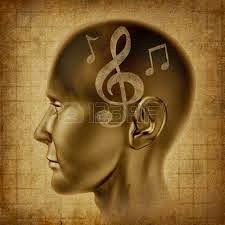
Science Corner/Psychology: How Does Music Affect Personality?
If you have read my blog from the start, this topic might sound pretty familiar (probably from the Science Corner: How Does Music Affect Learning Ability?), but what I'm gonna share here is somewhat psychological and scientific

Before knowing how magical and awesome music was, I was simply enjoying it as a pointless meaningless medicine, but now I might be going a bit too far on it, but anyways, the music we listen to shapes our personalities, and sometimes it helps our brain in a non-educational-related way. So let's start with some of the facts I searched:

1. Happy/Sad music affects the way we read neutral face
Happy/Neutral/Sad
We usually pick music based on their emotions, but the way our brain sees it isn't as simple that. A study shows that the neutral face we see gives different emotions accordingly to what you're listening, try it! Get one happy track and look at this picture, you'll find that this girl is feeling blissful, but if you try using sad songs, this girl looks as if she has given up all hope. So, are sad songs bad? Not really... They actually allow listeners to experience sorrow without having them ti go through themselves. (So be thankful to all those artists out there... They've sacrificed their emotions for you)

2. Ambient music helps increasing creativity
Abstract
Based on a study, moderate noises increases complexity, which could promote to thinking creatively. On high noise level, the creativity thinking decreases. I'm not pretty sure about it, but hey, why not give it a try?

3. The music we listen defines our personality
Well, this is definitely obvious.. and for those who loves to question themselves, this wouldn't be a surprise for you, but for those who just knew, this is actually pretty accurate. What we listen to builds up our personality. Studies have shown that certain genres have different results (see in the picture)
These are just results of the most commonly listened genre for nowadays people. There are actually more than these, but mostly subgenres, like; bubble pop, EDM, dubstep, etc.
There's a lot of these personality based on music taste tests in the Internet. One of my first tests I tried was THIS, and it was pretty accurate. For a person who just gets mentally amazed easily, I tried to dive into more tests, but I totally recommend you guys this first. It's fun!

4. Music aids in better exercise
For those gym bunnies, yes... music aids in your workout. Let's think of this logically, when exercising, your brain takes up more oxygen, but when music is present, the brain competes the "listening" activity alongside with the "exercising" activity, resulting with more usage of oxygen. More oxygen, healthier brain. It's also proven that those people who listen to music while exercising used up 7% more oxygen than those exercising in silence. Not to mention, the tempo of the music should suit with the intensity of your exercise. The faster the tempo, the harder you exercise. So start getting your earphones (or headphones) out and play your favorite song during your workout?! It's enjoyable to your body, and your ear..

Any fun facts about music you wanna share? Share it below!
Science Corner: How Did Tree of Life Came to Life?
With labels, you know which is which. Try
differentiating them without labels
You probably ever had those days when you and your mom went to the supermarket to prepare dinner, and you screwed up because you couldn't differentiate between sardine and mackerel, and thought "They're both fish, what's so different about them?" Well, apparently, they are different, and you'll be surprised that there are more organisms that looked very similar yet different. This is caused by evolution, a very slow gradual process of complexifying simple organisms into complex ones (Montogomery, S., 1997), an example is shown like the previous condition - tuna and mackerel are fishes, but there are more type of fishes other than those, like; sharks, and stingrays. Plus, this process is so widespread that it would be hard to explain by mere writings; hence, the "tree of life" was made to solve this problem. 
Tree of Life by Darwin in his notes of 36th page

Tree of Life
The "tree of life" or phylogenetic tree is a diagram that shows how an organism evolves into different types of modified species and how they are related to one and another in a branching manner; henceforth, resulting in a tree-like image (BBC, 2014) It was firstly made by Charles Darwin, who drew (the first) model of a phylogenetic tree on the 36th page of his notebook and well known for his book about evolution, "On the Origin of Species".

Evidence of Evolution
Organisms in phylogenetic tree are differentiated based on similarities and differences. However, they would need evidences to prove that the two or more different species they're comparing are related in an evolutionary way. 
Homology in pentadactyl limb structure
One good evidence is homology, a characteristic which shows similarity in structure between two or more species, for example; the skeletal structure between a monkey's hand, bird's wing, dolpin's fin and mole's leg are similar, although they're clearly different.

They have a pentadactyl limb with similar skeletal pattern. This characteristic isn't shown only in the following above, but also in almost all mammals. However, the function of the limbs for each species is modified based on their diet and habitat, like the monkey, its limbs are modified to hang and climb on to trees for fruits, while mole's are modified for digging underground to search for worms. Another evidence is the homologous traits shared by vertebrates during embryonic stage. 
Embryonic homology
As seen from the picture, every vertebrate has;
a tail posterior to the anus
dorsal, hollow nerve cord
muscle arrangements in sacromere
cartilaginous dorsal notochord
This evidence leads to hypothesis that human might share a common ancestor with other mammals (based on pentadactyl limb similarity), and other vertebrates (based on similarities during embryonic stages), and also states that evolution occured for one main purpose - to survive. 
The drive to survive not only evolved animals, but also plants and bacteria, by developing advantagous traits which will be passed down to the generation via gene transfer. There are two types of gene transfer - horizontal gene transfer and vertical gene transfer. Horizontal gene transfer (HGT), also known as lateral gene transfer, is the transfer of genetic materials between species, mostly seen in prokaryotes via transformation, transduction, and conjugation. It does occur in eukaryotes but largely unaffected (JO. A., 2005). Contrast to HGT, the vertical gene transfer transfers genetic materials from parents to their offsprings. In gene transfer, the donor cell passes down genetic materials to the recipient, resulting in recombination, which plays an important role in evolution by passing down advantagous genetic materials, making the fitter species to adapt and survive, while those that are unable to cope up will extinct; hence, recombination (new species) results in branching of the phylogenetic tree.

Cambrian Explosion
Another example of evolution is the Cambrian Explosion (took place around 542 million years ago), the sudden rapid appearance of complex organisms within around 10 million years, which is considered really fast; hence, results in an "explosion" of species. 
Cambrian Explosion
Not to mention, all animal body plans (distinctive Phylums like Molluscs and Chordata) appeared during this time, marking a tremendous change in the biosphere; conclusively, this explosion ultimately causes the phylogenetic tree to branch out rapidly from a single "trunk". (The Burgess Shale, 2011) 

Why Do Species Went Extinct?
Although there was a rapid introduction of new species during the Cambrian explosion, not much of them were able to survive, while those who survived kept evolving, and this pattern of "others didn't survive while the rest evolves" kept going until now. This pattern is defined by certain factors, such as;
Genetic variation between individuals
The DNA consists of genetic codes that code for different proteins which are needed for the body to undergo different functions. A random mutation on any single part of the genetic sequence could lead to either a better or worse protein that could either upgrade or degrade the individual itself. Hence, genetic variation between individuals increase, and as a result, those with positive mutation upgraded and passes down their genes, while those suffering with negative mutation are most likely to extinct. (Biotechnology Learning Hub, 2005)
Natural selection
Nature is a forever-changing battlefield, and in order to survive, one must adapt to it. If they succeed, they're most likely to pass down these advantagous genes to their offsprings, while those who can't keep up will extinct. Basically, natural selection is the "survival of the fittest". (Biotechnology Learning Hub, 2005)
Sexual recombination
When parents pass down their genes, the genetic codes are shuffled and results in recombination of genes. This could result into genetic variations, and like previously mentioned, this recombination will be tested for natural selection. (Biotechnology Learning Hub, 2005)
Genetic flow
Sometimes, when a group of species migrates away from its population, it changes the allelic frequency of its population. Likewise, gene flow occurs when a species of a group mates with another species of the different group, resulting in change of allelic frequencies of the group. (NFSTC Science Serving Justice, 2007)
Genetic drifting
In nature, there are some groups with allellic frequency which are so small that they're not represented with the groups with larger frequency. Genetic drifting occurs when allellic frequency of either sides increase or decrease, and this only happens by pure chance when there's a limited size of population. (NFSTC Science Serving Justice, 2007)
Overall, the phylogenic tree explains about the evolutionary pattern of living matters based on their differences and similarities, which are proven with evidence, such as; fossil evidence, anatomical evidence, genetic evidence, and other supporting evidence, and as far as I can say, the Tree of Life is nothing more than an imaginary tree that aids scientists in understanding how evolution occurs, which will keep branching in the future as science and technology develop.

So, know any infos I might've missed? Share them in the comments below!
2014's End Special: Origin of Time
Now that we've covered a part of origin of calendars, let's move on to how time was originated.
Unstoppable Time
How did we know that a day consists of 24 hours, and of course, this is related to the previous post; hence, different countries and tribes might use different methods to calculate hours. Like the Sumer calendar, it is (probably) agreed that a minute is 60 seconds and each hour is 60 minutes, but why 60? Why not 50 or 20?
EXTRA NOTES: 60 is a widely used number, such as; angles, time, and geographic coordination. The number 60, a superior highly composite number, has twelve factors, namely {1, 2, 3, 4, 5, 6, 10, 12, 15, 20, 30, 60}, of which 2, 3, and 5 are prime numbers. With so many factors, many fractions involving sexagesimal numbers are simplified. For example, one hour can be divided evenly into sections of 30 minutes, 20 minutes, 15 minutes, 12 minutes, 10 minutes, 6 minutes, 5 minutes, 4 minutes, 3 minutes, 2 minutes, and 1 minute. 60 is the smallest number that is divisible by every number from 1 to 6; that is, it is the lowest common multiple of 1, 2, 3, 4, 5, and 6.
One hour of time is divided into 60 minutes, and one minute is divided into 60 seconds. Thus, a measurement of time such as "3:23:17" (three hours, 23 minutes, and 17 seconds) can be interpreted as a sexagesimal number, meaning 3×602 + 23×601 + 17×600. As with the ancient Babylonian sexagesimal system, however, each of the three sexagesimal digits in this number (3, 23, and 17) is written using the decimal system.
Similarly, the practical unit of angular measure is the degree, of which there are 360 in a circle. There are 60 minutes of arc in a degree, and 60 arcseconds in a minute; hence the origin concept of clocks and stopwatch (the analogue stopwatch)
(Source: Wikipedia)
The 24 hours concept was actually counted by astronomers in the old days, and there were various methods in counting; counting from dawn, sunset, noon, and midnight. And again, each country have different methods in counting it.
For those which counted from dawn, sunrise marked the beginning of the first hour (the zero hour), the middle of the day was at the end of the sixth hour and sunset at the end of the twelfth hour. This meant that the duration of hours varied with the season. In the Northern hemisphere, particularly in the more northerly latitudes, summer daytime hours were longer than winter daytime hours, each being one twelfth of the time between sunrise and sunset. These variable-length hours were variously known as temporal, unequal, or seasonal hours and were in use until the appearance of the mechanical clock, which furthered the adoption of equal length hours. Not to mention, this concept might've lead some astronomers to think that the Earth's revolution orbit was NOT a circle shaped one, which was then proven and now lives the concept of elliptical shape orbit. And also, this method is used in Jewish law.
Sundial
Meanwhile, unlike the previous one, the Babylonians count hours using sundials, and divide the day and night into equal 24 hours.
For many centuries, up to 1925, astronomers counted the hours and days from noon, because it was the easiest solar event to measure accurately. An advantage of this method (used in the Julian Date system, in which a new Julian Day begins at noon) is that the date doesn't change during a single night's observing.
In the modern 12-hour clock, counting the hours starts at midnight and restarts at noon. Hours are numbered 12, 1, 2, ..., 11. Solar noon is always close to 12 noon, differing according to the equation of time by as much as fifteen minutes either way. At the equinoxes sunrise is around 6 A.M., and sunset around 6 P.M.
In the modern 24-hour clock, counting the hours starts at midnight and hours are numbered from 0 to 23. Solar noon is always close to 12:00, again differing according to the equation of time. At the equinoxes sunrise is around 06:00 and sunset around 18:00.
While astronomers are busy counting how many hours exist in a day, other scientists uses the concept of time as a unit to count other stuffs, like velocity, acceleration, force, manpower, etc. And so, it was probably universal for the world after they see their results and compare to one another, and agreed that one day consists of 24 hours.
2014's End Special: Origin of Time
We always complain that time is either too fast when we're having fun, or too slow when we're bored. Now, since 2014 is about to end (I know, "WHAT?! It's almost 2015 already?"), I'm going to share some of my findings upon searching about the origin of time. Now, let's start...In the past, cavemen have no knowledge about anything, they even thought 'fire' was a God. Now let's think logically, how do they discover 'time' if they even consider fire as God? Well, of course, humans think and curiosity brought us to where we are now. However, that leads to the main topic, where did time originated? Does time even exist?
The Fabric of Cosmos: Illusion of Time
Time, the fourth dimension after dimension of space. Scientifically, time is 'unreal', based on Antiphon and Sophist. They said that "Time is not a reality (hypostasis), but a concept (noêma) or a measure (metron)." Another thing is, some people assume time as nothing but mere illusion. Parmenides went further, maintaining that time, motion, and change were illusions, leading to the paradoxes of his follower Zeno, and religiously, time is considered to be a mortal illusion which is a common topic in the Buddhist religion.

However, in reality, we need time, now comes the origin of calendar and clocks. How did human knew that a day is 24 hours? How did they knew that there were DAY? How did they knew that months exist? How did years exist?
Now, let's start slow. Human probably knew how to find food before time exist, and they've probably knew when the land will be 'lighten' and 'darken', so I can assume that they will get tired once the land and sky darkens. Now the main question, when did calendars start existing? You probably know the all famous Mayans, and yes, they have a calendar of their own. Now, in early civilizations, several calendar systems were born, for example; in Sumer, their calendars have 12 months with 29 to 30 days each. The Mesoamericans made a calendar of their own, the Maya had two separate years—the 260-day Sacred Round, and the 365-day Vague Year, the ancient Athenians used a lunisolar calendar, which uses the phases of the moon, that lasted 364 days. The Romans used two different year lengths; the older one had 304 days divided into 10 months; the newer 365 days divided into 12 months; very much like the modern calendar.
Sumer calendar
 In Sumer calendar, each new month began with the new sighting of the moon. However, there was a problem in this calendar, due to the usage of sexagesimal system (in where the base number is 60), they do not use weeks, and in every month, there are different number of days. Not to mention, they always add another month for every new year, and the new month is around 62 days. (I know right, this method will make your life suffer more with less holidays). Another thing is, in this calendar, a day is divided into 12 hours (speaking of "not enough time"), six daylight hours, each lasting one-sixth of the day, and six nighttime hours, each lasting one-sixth of the night. This means each day in the Sumer calendar have different hours, which proves why during summer, daytime is longer, and during winter, nighttime is longer. However, due to the inconsistency, I'm pretty sure the system is stopped.
Mayan calendar (Yes, it doesn't make sense)
 The Maya calendars are the most complex one, and I have to say, I'm having a hard time understanding it. In their calendar, there are 2 years—the 260-day Sacred Round, and the 365-day Vague Year. The Sacred Round is divided into smaller cycles, and the Vague Year which is much like our modern calendar now, has 365 days, consisting of 18 20-days months. The Sacred Round is the smaller circle, each symbol represents a day, and they have different names: Imix, Ik, Akbal, Kan, Chicchan, Cimi, Manik, Lamat, Muluc, Oc, Chuen, Eb, Ben, Ix, Men, Cib, Caban, Eiznab, Cauac, and Ahau. They are usually used in important days for Gods, birthdate, determining auspicious dates, and predicting future. The days begin from Imix, the bird like diagram shown with one dot below it. The larger circle is the Vague Year, consisting of 18 month with different names, in order, as: Pop, Uo, Zip, Zotz, Tzec, Xuc, Yaxkin, Mol, Chen, Yax, Zac, Ceh, Mac, Kankin, Maun, Pax, Kayab and Cumku. (Now, for the prediction of 2012 End of the World will not be explain here, although it was related to the Mayan calendar)
Roman's father calendar
The Greece calendar has 365 days, to be precise, 365.25 days. This is the calendar we are using now. Then the Roman calendar consists of 10 months with 8 weeks, but they soon undergo further adjustment and we have the new 12 month a year calendar.


That's all for today's Origin of Time, did I forgot any info? Share it below!
Science Corner: Do We Only Use 10% of Our Brain?
 Do We Use 10% of Our Brain??
We always heard about this myth, "We use 10% of our brain", but first of all, who even made this myth? It was believed that Harvard psychologists William James and Boris Sidis, in the 1890s, who tested the theory in the accelerated raising of child prodigy William Sidis to effect an adulthood IQ of 250–300; thus, James told audiences that people only meet a fraction of their full mental potential, which is a plausible claim. (Wikipedia)
10%?
In the 1970s, psychologist and educator Georgi Lozanov, proposed the teaching method of suggestopedia believing "that we might be using only five to ten percent of our mental capacity." (Wikipedia)
 Apparently, this myth has brought many confusion to humankind, even Albert Einstein. It was believed that if we, human, were able to access into 100% of our brain, we will be able to do supernatural stuffs, like floating, seeing the future, or such. If that was true, then we would need to undergo some serious religious stuffs to be able to use 100% of our brain, because as far as I can see, Jesus, Buddha, and many religious figures were able to do such stuffs, which leads us back to the main topic. Did they access through all 100% of their brain?
Someone using 100% brain??

Well, honestly, if one tenth of our brain was used, then how come a simple knock over could lead to temporary (or worse, permanent) memory loss? Not to mention, if we used such little amount of our brain, then brain surgery wouldn't be much of a problem for human kind. Instead, we would actually get some DNA from Einstein's brain and start selling it out for the good of human kind.

Another thing is, how come we have so much subdivisions in our brain if we only use a tenth of it? How were we able to speak, move, look, listen, breathe, think, and feel at the same time? This might prove that we actually use 100% of our brain, I mean, imagine if we have to do every simple things one at a time, like; blink, then inhale, then look, then talk, then think for a few minutes, and the moment you knew what to say you probably have forgotten to exhale out. If this was to happen, it would be very disadvantageous to us human.
My last opinion is, if only a tenth of our brain is used, scientists wouldn't mind taking one human sample, insert a microchip thing to look at what the inside of the brain looks like without having the sample suffering from future problems. Not to mention, if a tenth was used, Alzheimer's disease wouldn't be an actual disease, but rather viewed as an elderly person trying to get some attention by doing weird stuffs.
A study has also proven that no matter how relaxed you are, your brain is still active. Sometimes, even some parts of the brain are much more active during rest, like the parasympathetic nervous system (a.k.a resting nervous system) which speeds up the digestion, slows the heart rate - resulting in a calm resting condition. It might be surprising (for those who didn't knew) that our brain requires a huge amount of energy, sugar, water, salt, and oxygen, as much as 20% of, separately, energy and oxygen, although it's only around 2% of our body weight. This might sound like a "waste" of energy, but truth be told, it's actually what's been keeping you alive till now. Another fun fact is,

Did you know your brain loves junk food?

OK, a simple question, would you prefer boiled carrots or crispy french fries. Be truthful, I'm very sure most will choose french fries. Why would we choose french fries over boiled carrots, we do know they're healthier. Reason is, your brain needs a LOT of energy and calories (like previously mentioned), so it's apparently more attracted to foods with high calories and energy. So for those who are trying to get a diet, try to control yourselves from eating "french fries" and start eating more "boiled carrots". Your body will thank you for doing so, although your brain won't be as happy as they are.

Did I forgot to mention anything in the blog? Share it via the comments!! 

Science Corner: Water Intoxication
Strange yet true, too much intake of water COULD kill you! And this might not be new for those who love to browse the Internet; however, for "I just realize it" people, I'm going to explain a bit of why too much water is dangerous for you.
Water
First off, we know water is really important, acting as a universal solvent (which means they help us by carrying minerals which are unused from our body out). However, there's a downside of drinking too much of this universal solvent. You see, some minerals like salt easily dissolves in water, and as the water is excreted via urine, these minerals will also go along with it. These salt loss via urine can be controlled by our kidney, which helps us by reabsorbing the minerals back before forming the urine we always urinate, but for some who over-hydrates, the water intake is so much that the kidney is not fast enough to reabsorb anything that passes through it; hence, resulting in loss of salt. Now what role does salt play as? As you know, they are needed for your conducting electric impulses in your brain, as they can release ions which are helpful in electric conducting. Now, with so much of salt loss from the excessive water you drank, the salt ions (Na+ is the one used in brain conduction) are lost alongside with the urine and are replaced with water instead (reason why it is replaced with water is because water gets absorbed by cells, and this leads the brain cells to absorb water which replaces the ions). And as the cells absorb more and more water, the brain cells starts to swell, causing not only headaches, fatigue, nausea, and vomiting, but might also lead to respiratory arrest and other body functions to malfunction if too much water intake continues. Hence, resulting in hyponatremia, which in other words, water intoxication or water poisoning. Crazy as it sounds, there are actually deaths caused by this problem, and the most suggested solution to prevent this from happening to you is to "drink water when thirsty". Hopefully by reading this, you guys can change your lifestyle a bit and also to remember "Too much of something good is bad for you".
Science Corner: Science of Lying (Yes, I'm Not Lying)
Yes, we all lie, even the worst ones like "I didn't forget to brush" even though your mouth smells like sewage, but surprisingly, there's a science behind lying.
The Science Behind Lying
First off, research have found out that in every 10 minutes conversation, a person will lie 3 times without knowing it. The reason behind why we are good (or bad) at lying is still unknown; however, lying is found out to (surprisingly) build good social relationship, although for some it might ruin good relationships. It's predicted that lying might have started since the old ages and turns out to be part of an evolutionary change.
As human evolve, those which are good at lying gets better at it, while those who are bad might need to learn a bit or two. Good liars are also known to see through lies, by detecting certain physical signals such as microexpressions, an example is the eye movement (signalling nervousness) during lying.
On the contrary, some people have lying disorder which leads them to lie unconsciously and the reason why they are able to do so is because they believe their own lies, and this makes them psychologically confused if they are telling the truth or not. First thing I want to tell all those who have this disorder, "Don't worry, it's not what you want. However, you still need help from a professional". Of course, I'm not a doctor, so I advise those who have Compulsive Lying Disorder to find a doctor for better help.
YES! Lying is somewhat needed, I mean, imagine the world with people who are being truthful. Teachers would easily detect cheating students, no police would be needed since all wrong doers would simply tell their bad deeds, and life would be nothing but truth. Although in a religious perspective, it will be a good thing. But of course, for a bright side, there's always a dark side, and you definitely do not want to lie to your close friends or relatives.
Back to the main topic, liars have a different brain shape. Reason being for this is because the brain is wired to accept reality, and by lying, you are actually forcing your brain to think the opposite of it. Some even state that learning to lie may actually increase intelligence, because it takes a lot of effort to lie (seriously). I mean, just imagine, to convince a person, you need to make sure your face, tone, emotions, or physique doesn't show any signs of lying. This leads to changing of the brain shape. Scientists discovered that liars have more white matter than grey matter.
The surplus of white matter leads to extra equipment for liars to think better lies.
White and Grey matter in brain
However, with the deficit of grey matter, they have problems in thinking morally like normal people would do, for example; people would normally try to lie to others (white matter is used in this session), but then again, they would think twice whether lying to the person might break their good relationship they had with them (grey matter is used in this part). As you can see, both white and grey matters are needed to maintain a healthy brain, but (again) I'm not a doctor, so my prediction would be that every person have different brain shapes because everyone thinks differently. So, to conclude this post, I would like to say that we should try to lie as little as possible. I know we live in a cruel world, so my advice would be try not to lie, but not to be straightforwardly truthful either, as it might hurt the person's feeling. In conclusion, think twice before speaking, I know some people would just think out loud, and this advice would definitely be less important, so for those people, try to reconsider others feeling while speaking, for we all know that the words we speak can't be taken back. Thanks for reading, for more info, you could check the links below!

               In this modern era, everything is advancing, even diseases. From regular coughs, which doesn't seem to be much of a big deal, to deadly pneumonia, asthma, and other respiratory diseases. As minor diseases develop stronger immunity against human immune system, new diseases strike humankind, one of the most commonly heard is probably cancer. Though it is curable during its early stages, it is still capable of taking lives silently without showing much symptoms during its early stages. There may be several methods and tests in spotting and preventing cancer, but one of the most successful test in detecting cancer is the Pap test.
               Between 1955 and 1992, cervical cancer declined by 70%, and continued till 2003. This great success in detecting and preventing cervical cancer from spreading is all thanks to the Pap test.
               The Pap test (Pap stands for Papanicolaou, originally came from the scientist who invented this test, Dr. George Nicholas Papanicolaou), also known as Papanicolaou smear or smear test, is a test that aims to detect signs of changes in the cavity of the cervix, which could either be precancerous or cancerous. In other words, it prevents cervical cancer from spreading out by detecting abnormalities during or before its early stages. (Martini, 2006, p. 114)
               Cervical cancer, not to be confused with ovarian cancer, is a type of cancer that attacks the cervix, a lower portion of the vagina, that could invade or spread to other parts of the body (for example; ovary). This cancer may be completely free of symptoms during its early stages, but signs such as abnormal vaginal bleeding, pelvic pain, or pain during sexual intercouse could be some signs that the cancer is developing. This cancer is majorly caused by HPV (Human Papillomavirus) infections; however, not all HPV infections could lead to cancer, but in some cases, the infection may naturally go away and form genital warts in the future. Cervical cancer is 100% curable when it is still in its early stages, thanks to Pap test. (Tortora, and Grabowski, 2003, p. 1054)
               The Pap test usually does not take much time, because the procedures are quite simple. Before taking the test, patients are strongly advised not to douche, do sexual intercourse, or take vaginal medications one or two days before taking the test. Firstly, the doctor will slowly insert an instrument, called speculum, that will open the vagina walls to allow access to the cervix. At this point of the test, patients might feel a minor discomfort, some might even feel a slight pain. Then, the doctor will take a few cell samples from the cervix, which will be taken to the lab for further inspection, with a spatula. After the test, patients might feel a mild pain in the uterine area, and light vaginal bleeding might immediately happen after the test. (DeMay, 2005, p. 196-199)
               There are 2 results in this test, either normal or abnormal results. Normal result, usually said as "negative", means that there were no abnormal cell growth present. In some small cases, presence of abnormality was missed during inspection, but the follow-up test should be able to detect it. Abnormal result, usually said as "positive", means there is a presence of abnormal cell growth. It is grouped into 5; ASCUS, LSIL or HSIL, CIS, ASC, and AGC. (DeMay, 2005, p. 200-201)
               Briefly, ASCUS (Atypical Squamous Cells of Undetermined Significance) result means there are changes, but it remains unclear what the changes mean, it might be caused by HPV, and may lead to cancer. LSIL (Low-grade Dysplasia) or HSIL (High-grade Dysplasia) means abnormal cell growth are present. Compared to LSIL, HSIL shows a greater risk of abnormality. CIS (Carcinoma In Situ) means the changes are most likely to lead to cervical cancer if left untreated. ASC (Atypical Squamous Cells) means abnormal changes are detected and mostly likely might be HSIL. AGC (Atypical Glandular Cells) means the precancerous cells are seen in the upper parts of the cervical area. (DeMay, 2005, p. 200-201)
               Although the Pap test is reliable in detecting precancerous and cancerous cells in the cervix, it has its limitations too. Firstly, it is not 100% accurate, because the sample taken is just one small part of the cervix, which means the other parts might have cancerous cells. This is why it is advised to have regular tests, usually every two years if the results are negative (for minor changes, it is advised to take another test in 6-12 months). Not to mention, unsatisfied tests usually occured when blood, mucus, or vaginal bacterias are found present on the sample, making the cells hard to see. It is also strongly suggested that patients take the Pap test until they are 65 years old and has 2 or 3 negative results, this is advised because one Pap test does not stop the precancerous and cancerous cells from developing. Besides, not all part of the cervix was inspected during the test, like previously said, which means there is a possibility that the other area of the cervix might have abnormalities. (DeMay, 2005, p. 203-211)
               One study shows that sampling error by clinician is responsible for 62% of false negative smears, while interpretive error by pathologists is responsible for 22%, and screening errors by cytotechnicians accounted for 16%. The reason why such error occurs is because, in order for the samples to be perfectly analyzed, it must be adequately collected, the slide must be closely monitored for abnormalities, and they must be appropriately interpreted. Deficiency in any of these steps could lead to a false negative result. Sometimes, the abnormal cells are missed under the microscope, and some abnormalities occurs in areas that are not always possible to get as samples, for example; the glands of the cervix. (DeMay, 2005, p. 203-211)
               Not only human (clinicians, pathologists, etc.) errors, but the patients' decision and personality might also affect their chances in earlier prevention of cervical cancer. For some women, having their vaginas shown might be embarassing and uncomfortable, (especially when the doctor is a guy) which could back them off from taking the test for earlier prevention. This is pretty understandable and most of these types of women are advised to find a reliable and trusted doctor. All in all, the Pap test has shown great success in detecting precancerous and cancerous cells in cervix. Although some minor discomforts might be a problem for some, it is still advisable for women aged 21 and above to take the test regularly, for the sake of preventing cervical cancer development and maintaining a healthy body. I know I might not be a doctor, but what my motive in sharing this is to inform women out there to be more cautious and aware of their health.
Science Corner: How Does Music Affects Your Learning Ability

music
Music, an art form whose mediums are sound, silence, and other common elements, such as; pitches, rhythms, and dunamics. There is no certain origin of music, but one thing's for sure is that music affects our education and our learning ability. How?

According to a study conducted by the University of California at Irvine, pre-school age kids who received daily music lessons (either playing instrument or just singing) were significantly better at completing puzzles than those who didn't. Although this one study doesn't show much proofs, it has been proven that music does affect learning abilities, one of it is abstract learning. 


Abstract learning is the most complex type of learning, known as the ability to solve problems or figure something out by coming to a logical conclusion based on observation.

To put it in simpler terms, you make a few tests to prove something that you think is actually true after going through some observations. This is also known as abstract reasoning, which means, music enhances our ability to learn about the world and other stuffs by;


  • Forming a theory about the nature of ideas
  • Solving problems using such theories
  • Analyzing and evaluating ideas and objects
  • Solving problems using abstract methods, such as the usage of metaphors and analogies.


Learning music also creates, what neuroscientists call "neural pathways" which acts as our brain's highway used to retrieved information. Hence, leading to better learning abilities.

Another study at the University of Wales shows that background music affects student's ability to recall, in other words, improves memory. There were 5 conditions during the test

  1. A quiet environment
  2. With "steady state" speech, which means a single word was repeated for the duration of the test
  3. With "changing state" speech. This means variety of words were played during the test
  4. With "liked" music
  5. With "disliked" music

Surprisingly, the results shows no difference between test score with liked music, disliked music, and changing state speech. This means, whether they liked the music or not, having it on while working was just as distracting as hearing someone talk, while the quiet and steady state speech condition scored higher.

It's just the same as the condition in where you are trying to do your homeworks while your friends are chatting with you, but unfortunately, it depends on the person. Some may find listening to music distracting, some may not, and some may find it undistracting at all.

We'll need to wait for more results, but if you're asking me what type of music that might improve learning ability, my suggestions are some calm music, just to lighten your stressed brain, such as; jazz, classical music, bluegrass, or some soft rock. Avoid music with lyrics, as lyrics will distract you from concentrating (I've tried it before).


Source:
http://www.mindthesciencegap.org/2012/10/08/does-music-help-you-study/
http://www.quantumjumping.com/articles/subconscious/how-music-affects-the-brain-enhance-learning-attitude-and-health/
Copyright © 2015 aleng's journal
Distributed By Blogger Template | Created By Dicky Bust