Showing posts with label psychology. Show all posts
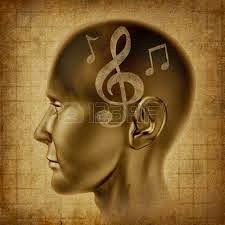
Science Corner/Psychology: How Does Music Affect Personality?
If you have read my blog from the start, this topic might sound pretty familiar (probably from the Science Corner: How Does Music Affect Learning Ability?), but what I'm gonna share here is somewhat psychological and scientific

Before knowing how magical and awesome music was, I was simply enjoying it as a pointless meaningless medicine, but now I might be going a bit too far on it, but anyways, the music we listen to shapes our personalities, and sometimes it helps our brain in a non-educational-related way. So let's start with some of the facts I searched:

1. Happy/Sad music affects the way we read neutral face
Happy/Neutral/Sad
We usually pick music based on their emotions, but the way our brain sees it isn't as simple that. A study shows that the neutral face we see gives different emotions accordingly to what you're listening, try it! Get one happy track and look at this picture, you'll find that this girl is feeling blissful, but if you try using sad songs, this girl looks as if she has given up all hope. So, are sad songs bad? Not really... They actually allow listeners to experience sorrow without having them ti go through themselves. (So be thankful to all those artists out there... They've sacrificed their emotions for you)

2. Ambient music helps increasing creativity
Abstract
Based on a study, moderate noises increases complexity, which could promote to thinking creatively. On high noise level, the creativity thinking decreases. I'm not pretty sure about it, but hey, why not give it a try?

3. The music we listen defines our personality
Well, this is definitely obvious.. and for those who loves to question themselves, this wouldn't be a surprise for you, but for those who just knew, this is actually pretty accurate. What we listen to builds up our personality. Studies have shown that certain genres have different results (see in the picture)
These are just results of the most commonly listened genre for nowadays people. There are actually more than these, but mostly subgenres, like; bubble pop, EDM, dubstep, etc.
There's a lot of these personality based on music taste tests in the Internet. One of my first tests I tried was THIS, and it was pretty accurate. For a person who just gets mentally amazed easily, I tried to dive into more tests, but I totally recommend you guys this first. It's fun!

4. Music aids in better exercise
For those gym bunnies, yes... music aids in your workout. Let's think of this logically, when exercising, your brain takes up more oxygen, but when music is present, the brain competes the "listening" activity alongside with the "exercising" activity, resulting with more usage of oxygen. More oxygen, healthier brain. It's also proven that those people who listen to music while exercising used up 7% more oxygen than those exercising in silence. Not to mention, the tempo of the music should suit with the intensity of your exercise. The faster the tempo, the harder you exercise. So start getting your earphones (or headphones) out and play your favorite song during your workout?! It's enjoyable to your body, and your ear..

Any fun facts about music you wanna share? Share it below!
Psychology: Intro
Are the human brains not complex enough to understand the mind? Well, that is where psychology comes into study, but before getting into depth, what is psychology actually about?
Psychology, the study of human's mental functions and behaviors, studies mainly about the mind, emotions, behavior, interrelationships, and personalities. Now first thing is, what is the first thing that came into your mind when you hear the term 'Psychology'? Probably a psychologist sitting next to their patients listening to their stories.
👈Like THAT
And yes, you're probably thinking of Sigmund Freud, and Austrian neurologist, a.k.a Father of Pschoanalysis. He might not be the Father of Psychology, but he brought up a lot of theories that are used in nowadays psychology, like personalities, mental illness, dreams, and many more. He did these by bringing out the unconscious thoughts into consciousness by advising them to tell their stories, dreams, and daily life activity. Then try to interpret and analyze them. As simple as it might sound to just listen to their stories, psychology is one of the most complex studies that involves a lot of data and multiple theories, which could be obtained either in a qualitative or quantitative form. Qualitative refers to get information via interviews, participant observation, or any direct interaction with the participant, while quantitative data refers to the information obtained by statistics and experimental results.

On the positive side, psychology helped a lot of people in understanding themselves, curing mental illnesses, and also aids in mind development, which is usually seen in schools and other educational places. No matter how good it is, there's always a downside to something, and in terms of psychology, it is mostly criticized as "soft" science since it lacks strong theories compared to mature sciences like physics and maths. Not to mention, some parts of psychology is immeasurable, like personalities and emotions, for example. All in all, it's still a study that needs to undergo some researches, and even though it might not be a strong science, it still fascinates human being, which proves that this science might be true and might have more importance to humankind in the future.

Wanna share some thoughts about psychology? Share them on the comments below..
Science Corner: Science of Lying (Yes, I'm Not Lying)
Yes, we all lie, even the worst ones like "I didn't forget to brush" even though your mouth smells like sewage, but surprisingly, there's a science behind lying.
The Science Behind Lying
First off, research have found out that in every 10 minutes conversation, a person will lie 3 times without knowing it. The reason behind why we are good (or bad) at lying is still unknown; however, lying is found out to (surprisingly) build good social relationship, although for some it might ruin good relationships. It's predicted that lying might have started since the old ages and turns out to be part of an evolutionary change.
As human evolve, those which are good at lying gets better at it, while those who are bad might need to learn a bit or two. Good liars are also known to see through lies, by detecting certain physical signals such as microexpressions, an example is the eye movement (signalling nervousness) during lying.
On the contrary, some people have lying disorder which leads them to lie unconsciously and the reason why they are able to do so is because they believe their own lies, and this makes them psychologically confused if they are telling the truth or not. First thing I want to tell all those who have this disorder, "Don't worry, it's not what you want. However, you still need help from a professional". Of course, I'm not a doctor, so I advise those who have Compulsive Lying Disorder to find a doctor for better help.
YES! Lying is somewhat needed, I mean, imagine the world with people who are being truthful. Teachers would easily detect cheating students, no police would be needed since all wrong doers would simply tell their bad deeds, and life would be nothing but truth. Although in a religious perspective, it will be a good thing. But of course, for a bright side, there's always a dark side, and you definitely do not want to lie to your close friends or relatives.
Back to the main topic, liars have a different brain shape. Reason being for this is because the brain is wired to accept reality, and by lying, you are actually forcing your brain to think the opposite of it. Some even state that learning to lie may actually increase intelligence, because it takes a lot of effort to lie (seriously). I mean, just imagine, to convince a person, you need to make sure your face, tone, emotions, or physique doesn't show any signs of lying. This leads to changing of the brain shape. Scientists discovered that liars have more white matter than grey matter.
The surplus of white matter leads to extra equipment for liars to think better lies.
White and Grey matter in brain
However, with the deficit of grey matter, they have problems in thinking morally like normal people would do, for example; people would normally try to lie to others (white matter is used in this session), but then again, they would think twice whether lying to the person might break their good relationship they had with them (grey matter is used in this part). As you can see, both white and grey matters are needed to maintain a healthy brain, but (again) I'm not a doctor, so my prediction would be that every person have different brain shapes because everyone thinks differently. So, to conclude this post, I would like to say that we should try to lie as little as possible. I know we live in a cruel world, so my advice would be try not to lie, but not to be straightforwardly truthful either, as it might hurt the person's feeling. In conclusion, think twice before speaking, I know some people would just think out loud, and this advice would definitely be less important, so for those people, try to reconsider others feeling while speaking, for we all know that the words we speak can't be taken back. Thanks for reading, for more info, you could check the links below!

Science Corner: How Does Music Affects Your Learning Ability

music
Music, an art form whose mediums are sound, silence, and other common elements, such as; pitches, rhythms, and dunamics. There is no certain origin of music, but one thing's for sure is that music affects our education and our learning ability. How?

According to a study conducted by the University of California at Irvine, pre-school age kids who received daily music lessons (either playing instrument or just singing) were significantly better at completing puzzles than those who didn't. Although this one study doesn't show much proofs, it has been proven that music does affect learning abilities, one of it is abstract learning. 


Abstract learning is the most complex type of learning, known as the ability to solve problems or figure something out by coming to a logical conclusion based on observation.

To put it in simpler terms, you make a few tests to prove something that you think is actually true after going through some observations. This is also known as abstract reasoning, which means, music enhances our ability to learn about the world and other stuffs by;


  • Forming a theory about the nature of ideas
  • Solving problems using such theories
  • Analyzing and evaluating ideas and objects
  • Solving problems using abstract methods, such as the usage of metaphors and analogies.


Learning music also creates, what neuroscientists call "neural pathways" which acts as our brain's highway used to retrieved information. Hence, leading to better learning abilities.

Another study at the University of Wales shows that background music affects student's ability to recall, in other words, improves memory. There were 5 conditions during the test

  1. A quiet environment
  2. With "steady state" speech, which means a single word was repeated for the duration of the test
  3. With "changing state" speech. This means variety of words were played during the test
  4. With "liked" music
  5. With "disliked" music

Surprisingly, the results shows no difference between test score with liked music, disliked music, and changing state speech. This means, whether they liked the music or not, having it on while working was just as distracting as hearing someone talk, while the quiet and steady state speech condition scored higher.

It's just the same as the condition in where you are trying to do your homeworks while your friends are chatting with you, but unfortunately, it depends on the person. Some may find listening to music distracting, some may not, and some may find it undistracting at all.

We'll need to wait for more results, but if you're asking me what type of music that might improve learning ability, my suggestions are some calm music, just to lighten your stressed brain, such as; jazz, classical music, bluegrass, or some soft rock. Avoid music with lyrics, as lyrics will distract you from concentrating (I've tried it before).


Source:
http://www.mindthesciencegap.org/2012/10/08/does-music-help-you-study/
http://www.quantumjumping.com/articles/subconscious/how-music-affects-the-brain-enhance-learning-attitude-and-health/
Copyright © 2015 aleng's journal
Distributed By Blogger Template | Created By Dicky Bust